
Brain Test 2: Tricky Stories
Unico StudioTrivia
4.715.81K Reviews
- Version
- 1.26.13
- Installs
- 100.00M
- Age Rating
- Everyone 10+
Screenshots
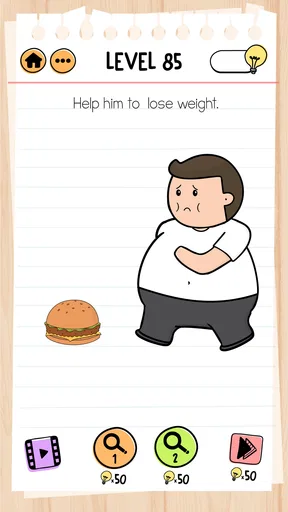
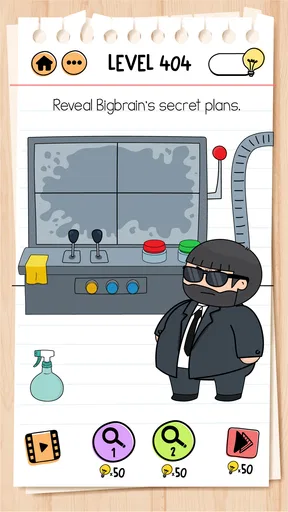
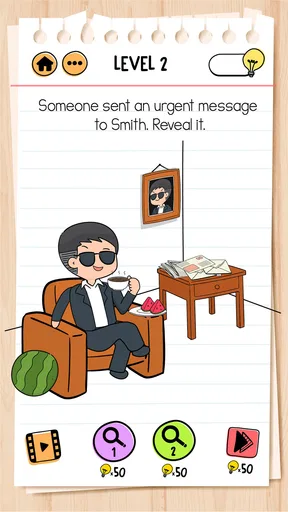
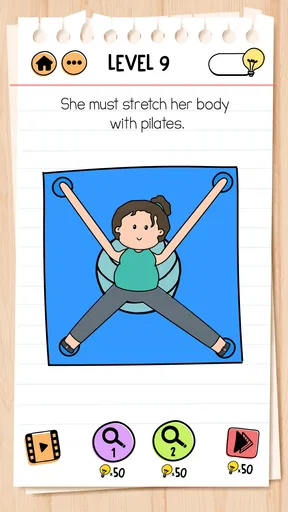
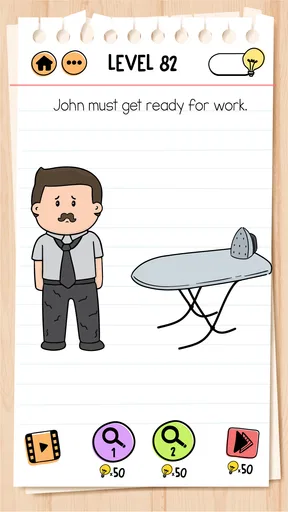
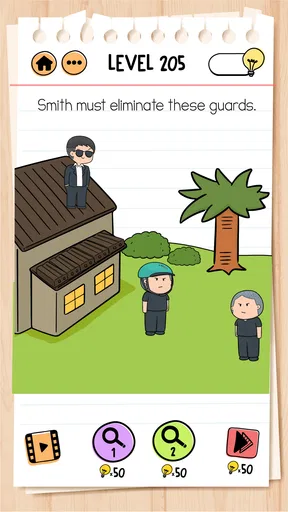
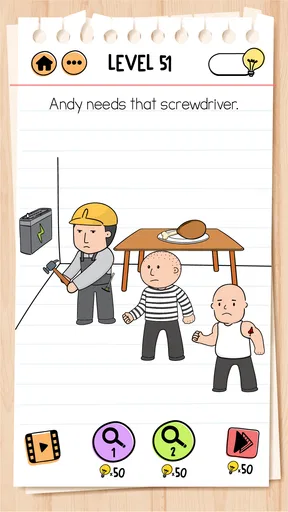
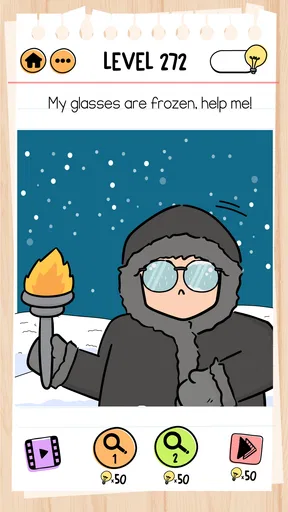
Our Review of Brain Test 2: Tricky Stories
 Analysis by Appyee
I tend to enjoy puzzle games most when they give me a reason to care about the next screen, and that is the main appeal I find in Brain Test 2: Tricky Stories. Instead of presenting every challenge as a detached brainteaser, it places puzzles inside short, playful stories. That small change affects how I play: I am not only looking for a solution, but also following what happens to the characters once I find one.
It is a free trivia game from Unico Studio, rated for Everyone 10+, and it has become a particularly popular choice, with an average rating of 4.8 from around 1.7 million ratings and more than 100 million installs. Those figures suggest broad appeal, but the useful question is whether its style suits you. I would describe it as a casual game for people who like lateral-thinking challenges, light comedy, and progress in short sessions—not as a serious quiz or a demanding logic course.
Stories give each puzzle a little context
The story framing is the capability that most changes the experience. A level can involve a farmer dealing with hungry animals or a scientist caught up in an odd experiment, so the puzzle has a simple situation to interpret. I find that context helpful when a challenge initially seems strange: I can look at the characters and their predicament, rather than treating the screen like an abstract test with no clues beyond its objects.
The stories also give the game a natural rhythm. Solving one puzzle feels like a small step in an ongoing thread, which can make me more willing to try the next one than I might be in a list of unrelated riddles. The characters and comic situations are deliberately broad, and that is part of the charm. If you want detailed storytelling or a serious plot, the narrative is too light for that; its job is to add personality and a reason to keep moving.
What Makes It So Engaging?
One of the first things I noticed about Brain Test 2: Tricky Stories is its unique approach to puzzle-solving. Unlike other games where you might be matching colors or solving math problems, this one takes a more narrative-driven approach. Each level is part of a story, which makes it feel like you’re not just solving puzzles, but also unraveling a quirky tale.
The game offers several different stories, each with its own set of characters and challenges. From helping a farmer protect his crops from hungry animals to assisting a scientist with his wacky experiments, the stories are as diverse as they are entertaining. This variety keeps the game fresh and exciting, ensuring that you never get bored.
The Puzzles: Tricky but Fun
The puzzles themselves are what you might call "deceptively simple." At first glance, they seem easy, but they often require out-of-the-box thinking. For instance, you might find yourself needing to tilt your phone to solve a level or use multiple fingers to interact with the screen. It’s these unexpected twists that make the game so addictive.
Additionally, the game’s humor is a major selling point. The developers have infused each level with a sense of playfulness that’s hard not to enjoy. Whether it’s a punny hint or a character’s silly expression, there’s always something to make you smile.
Reading the scene before tapping
My most useful habit is to pause for a moment before trying random taps. I look at the whole scene, identify what is unusual, and ask what the character needs rather than what the obvious button seems to invite me to do. That approach is especially valuable in a game built around misdirection: the first plausible action is often not the one the puzzle is asking for.
I also treat the phone as part of the puzzle, not just a window onto it. The original article’s examples of tilting the device and using more than one finger point to an important practical lesson: when ordinary tapping does not work, consider whether the level expects a different kind of touch or movement. Trying one deliberate alternative at a time is more informative than swiping everywhere, because it helps me understand the trick rather than stumble into it by luck.
A good fit for little gaps in the day
The short puzzle format makes this an easy game to pick up while waiting for a ride, taking a break, or sitting through a quiet stretch between errands. A realistic use for me would be opening it during a few minutes in a waiting room, solving a level or two, then putting the phone away without needing to remember a complicated strategy. The story gives each challenge a modest sense of continuity, but the individual puzzles are approachable enough for brief play.
That same structure makes it a reasonable game to share casually with a friend or family member: one person can describe what they think the scene is asking, while the other suggests a different interpretation. I would not choose it for a group that wants a formal, timed quiz, though. Its fun comes from noticing an unexpected interaction, not from racing through factual questions or competing on general knowledge.
Compared with standard trivia apps, which usually test what you know, this game is more about how flexibly you interpret what you see. Compared with a conventional collection of logic problems, it leans harder on humor, visual clues, and story context. That makes it more inviting when I want something playful, but less suitable if I specifically want a structured course in reasoning or puzzles with long, carefully layered solutions.
Hints, frustration, and the cost of getting unstuck
One thing I particularly appreciate is the hint system. If you ever get stuck on a puzzle, you can use hints to guide you without giving away the answer completely. This feature strikes a nice balance between challenge and accessibility, ensuring that the game remains enjoyable for players of all skill levels.
Hints are most useful when I have already studied the scene and tried a couple of sensible actions. Used too quickly, they can take away the best part: the moment when an odd detail suddenly makes sense. If I am still stuck after a hint, I would rather revisit the objects and character goals than keep tapping at random. The trade-off is that a hint can lower irritation, but leaning on guidance for every unfamiliar trick may make the puzzles feel less satisfying.
The game is free to start, while optional in-app purchases range from $1.99 to $8.99 per item. I would approach those as a personal convenience choice rather than a requirement for enjoying the basic idea: if a puzzle is frustrating, taking a break is another sensible option. The current version is 1.20.43 and it requires Android 7.0 or later, so it is worth checking compatibility before downloading on an older device.
Where the light style has limits
The very quality that makes these puzzles approachable can also be a limitation. Some solutions depend on spotting a playful trick or trying an unexpected interaction, which may feel arbitrary if you prefer clues that point clearly toward a logical answer. When I want a calm, methodical puzzle with a transparent chain of deduction, I would choose a more traditional logic game instead.
Likewise, the humor and simple story setups will not land equally well for everyone. Players looking for a deep plot, realistic characters, or a large, explorable world may find the scenes too brief and the tone too silly. The game is strongest when I accept that it is aiming for quick surprises, not emotional storytelling or a demanding narrative adventure.
Visuals and User Experience
Visually, the game is a treat. The graphics are bright and colorful, contributing to the overall light-hearted feel of the game. The animations are smooth, and the interface is intuitive, so you’ll be navigating through the different stories and puzzles with ease.
For me, the simple presentation matters because it keeps attention on the puzzle rather than on complicated menus or decorative detail. The clear, colorful scenes make it easier to scan characters and objects for something that might matter. Still, a clean interface cannot make every trick obvious; when I hit a confusing level, the challenge is usually interpreting the scene, not learning how to navigate the game.
Who is likely to enjoy it most?
I would recommend it to players who like playful riddles, enjoy testing more than one interpretation, and are happy to use a hint occasionally rather than abandon a puzzle. It can also work for someone who wants an easygoing mobile game to dip into instead of committing to a long session. Its Everyone 10+ content rating is a useful guide for families considering it, though I would still make the decision based on whether the game’s silly, trick-based humor suits the player.
I would skip it if you mainly want factual trivia, competitive leaderboards, realistic storytelling, or puzzles that reward formal deduction every time. It may also frustrate anyone who dislikes solutions involving unusual touch gestures or device movement. Knowing that before starting helps set the right expectation: this is less a test of what you have memorized and more a playful prompt to question your first assumption.
Why You Should Give It a Try
In a world filled with countless mobile games, Brain Test 2: Tricky Stories stands out for its creativity and charm. It’s the kind of game that’s perfect for short bursts of play during your commute or while waiting in line. But be warned: once you start, it’s hard to put down!
In conclusion, if you’re looking for a game that challenges your brain while also providing a good laugh, this might just be the perfect fit. With its engaging stories, clever puzzles, and delightful humor, it’s a game that offers a refreshing break from the ordinary. So why not give it a shot and see if you can solve all the tricky stories it has to offer?
My final take on the experience
Released on May 16, 2020, the game has had time to find a large audience, but its appeal is still quite specific: it depends on enjoying compact, comic puzzles more than chasing a score or mastering a complicated system. I like the way the stories give the riddles a bit of shape, and the unusual interactions keep me from solving everything by instinct alone. That combination is the reason I would choose it over a plain sequence of brainteasers when I want something lighter.
My practical advice is to try a few levels with a curious, patient mindset, use hints as nudges rather than shortcuts, and stop when the trick stops being fun. If that style clicks, the free download makes it easy to see whether the humor and puzzle logic suit you. If you prefer cleanly signposted reasoning or serious trivia, another game in the category will probably be a better match.
Privacy and Permissions
See what permissions an app requests and how it handles your data.
- Wi-Fi connection information
- view Wi-Fi connections
- Other
- view network connections, full network access, control vibration, prevent device from sleeping, Google Play license check
Verdict
Strengths of Brain Test 2: Tricky Stories
- Engaging puzzles with diverse challenges.
- User-friendly interface for easy navigation.
- Humorous storylines add to the fun.
- Offline play available for on-the-go gaming.
- Regular updates with new levels.
Limitations of Brain Test 2: Tricky Stories
- Some levels can be frustratingly hard.
- Ads can interrupt gameplay frequently.
- In-app purchases may be necessary.
- Limited hints can stall progress.
- Requires patience for trial and error.
Other Releases by Unico Studio
View All
Brain Test: Tricky Puzzles
Trivia4.7

Who is? Brain Teaser & Riddles
Trivia4.7

Brain Test 3: Tricky Quests
Trivia4.7

Popular Words: Family Game
Trivia4.8
Similar Picks in This Category
View All
Millionaire 2026 Quiz & Trivia
Quiz & Trivia Games by Submarine Apps4.5

Trivia Crack: Brain Quiz Games
etermax4.4

QuizzLand. Quiz & Trivia game
Quiz & Trivia Games by Mno Go Apps4.8
Brain Test: Tricky Puzzles
Unico Studio4.7

Logo Quiz
bubble quiz games4.5

Millionaire - Quiz & Trivia
Trivia & Quiz Games by Nuomondo4.6
You May Also Like
View All


Frequently Asked Questions
What is Brain Test 2: Tricky Stories?
Brain Test 2: Tricky Stories is a puzzle game available on Android and iOS that challenges your problem-solving skills with a series of tricky and humorous levels. Each level presents a unique scenario that requires creative thinking and logic to solve. It's designed to be fun and engaging for players of all ages.
Is Brain Test 2: Tricky Stories free to play?
Yes, Brain Test 2: Tricky Stories is free to download and play. However, it includes in-app purchases that can enhance the gaming experience. These purchases might include hints or ad-free gameplay. Players can enjoy most of the game without spending money, but some features may require payment.
Are there any age restrictions for playing Brain Test 2?
Brain Test 2 is suitable for all ages, but it is recommended for players aged 12 and up due to some complex puzzles that might be challenging for younger children. The game is family-friendly, with no inappropriate content, making it a great choice for a fun and educational experience for older kids and adults alike.
What kind of puzzles can I expect in Brain Test 2?
Brain Test 2 offers a wide variety of puzzles that require lateral thinking and creativity. The puzzles range from simple logic problems to more complex scenarios that involve multiple steps or layers of thought. Each level is designed to surprise and challenge players, often requiring you to think outside the box to find the solution.
Does Brain Test 2 require an internet connection to play?
While Brain Test 2: Tricky Stories can be played offline for most of its content, an internet connection is required to access certain features, such as in-app purchases and updates. Playing offline is a great option for uninterrupted gameplay, but connecting online ensures you have the latest content and features.
Play our best games!


